
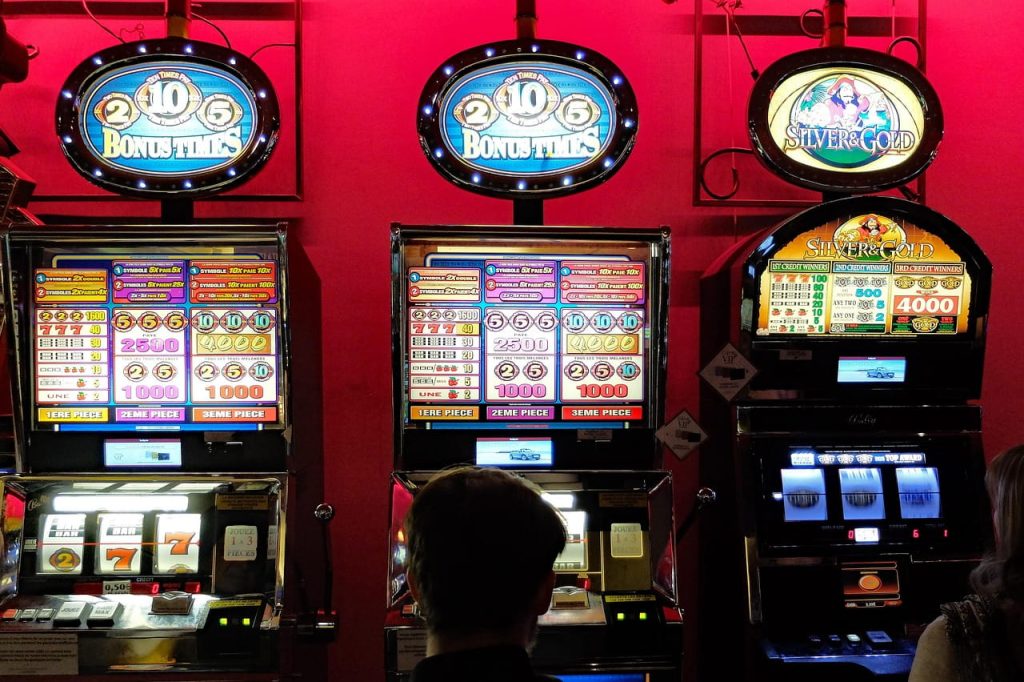
The easiest way to misread a modern pokie is to treat the bonus round like decoration. In a lot of games, it is the opposite. The feature is what sets the rhythm, changes the pace of attention, and gives the title its identity. A scatter trigger can slow everything down by making each reel feel heavier. A respin sequence can stretch a moment that would otherwise be over in a second. When a player says a game feels exciting, smooth, tense, or sticky, they are often describing the feature logic more than the theme.
That helps explain why bonus design matters so much. Good feature design tells players what to watch, when to expect a shift, and why one symbol suddenly matters more than the rest. Open-access work on the task-attention theory of game learning makes a useful point here: what players learn is shaped by what a game trains them to notice. That idea fits pokies well. Once a title establishes that scatters open free spins or that locked symbols can restart a respin sequence, attention changes immediately. The screen is no longer a flat loop of identical outcomes. It becomes a field of cues, delays, and near-completions that give the game texture.
How Feature Design Starts Defining the Session
That is the point where examples become more useful than abstract definitions. If you want to see how different titles build around free spins, jackpot layers, and Hold and Win style respins, it makes sense to play Joe Fortune pokies, opting for a platform focused on pokies, rather than think about the category in the abstract. This page works as that kind of context because it is a pokies destination, and offers video slots, 3D slots, and Hold and Win titles, rather than one narrow format.
That range matters because bonus systems rarely change only one thing. They change tempo, attention, and memory at the same time. A free spins feature can make the game feel more focused by stripping away the normal stop-start rhythm. A respin loop can make every added symbol feel heavier because the sequence keeps renewing itself. Once the basic definitions are clear, the fastest way to test the difference is to play pokies online with a specific question in mind: what exactly changes in the game’s flow when the feature begins, and what stays constant underneath it?
That also explains why favorite games are often remembered for their feature rhythm before their theme. Spend a bit of time thinking about what games you love and why, and you’ll quickly gain insight into which features feel most satisfying to you.
The Best Features Change More Than the Payout Screen
As we mentioned above, the strongest bonus systems usually work on multiple levels at once, so it’s worth paying attention to how they adjust the sensation of playing. Ask yourself, what are they doing to the pace? What are they doing to visual priority and the way your eyes move around the screen? For instance, a scatter on the first reels changes what the eye begins hunting for next.
Next, how are they affecting your expectations? Once a game teaches the player how a feature can arrive, partial setups begin to matter more. The player is not just watching the reels stop. The player is reading the approach of a state change.
That is why two pokies with similar themes can feel nothing alike. One may be built around quick bursts of action and short transitions. Another may lean on delayed release, where the anticipation matters almost as much as the feature itself. A third may use smaller events that keep the screen active long before the headline moment appears. If every one of those games is described with the same generic language, the most interesting part gets flattened. The better question is not only what feature a game has, but what kind of timing model it creates.
A Better Way to Read Common Bonus Systems
| Feature type | What it changes | What players usually feel |
| Free spins | Removes part of the normal stop-start loop | A cleaner sustained phase |
| Respins | Extends a single moment through renewal | Rising tension and stickiness |
| Scatters | Changes attention before the feature even starts | Anticipation and cue tracking |
| Jackpot layers | Adds background weight to ordinary spins | A sense of larger possibility |
Bonus rounds are not best understood as extras. They are often the part of the design that teaches players how to read the rest of the game. Theme can get attention first, but structure is usually what determines whether a title feels flat, brisk, heavy, or memorable over time. Once you start reading a pokie through that lens, modern feature-heavy games make a lot more sense.
For readers who want to keep going beyond surface definitions, an open-access meta-analysis on video game factors and cognition is a useful next read because it shows how game structure can shape attention and higher-order processing in ways that go far beyond art style or presentation.
