
Since 2009, Shark Tank has been entertaining audiences and helping entrepreneurs to raise money for their businesses. The Sharks have made over 800 televised deals but not all of them have closed! Below are 20 of the biggest Shark Tank on-air deals in the show’s history.
Largest Ever Shark Tank Deals:
1. Zero Pollution Motors – $5 Million (Did Not Close)
Zero Pollution Motors entered Shark Tank with its compressed-air city vehicle, the AIRPod, pitched as a low-cost, zero-emission car for urban commuting. Founders asked for $5 million for 50 % equity, and Robert Herjavec made an on-air offer on similar terms.
It was the largest offer in show history, but the deal didn’t close once due diligence began. The company has not delivered mass-produced AIRPods in the U.S., and its original manufacturing plans stalled after the episode.
2. SynDaver Labs – $3 Million (Did Not Close)
SynDaver Labs showcased highly realistic synthetic human and animal cadavers for medical training and research, asking for $3 million for equity. Robert Herjavec offered $3 million for 25 % but the deal fell apart after filming.
The company continued independently, supplying medical schools and institutions with synthetic anatomy models and expanding its product range well beyond its Shark Tank appearance
3. Moki Doorstep – $3 Million
Moki Doorstep is a simple metal step that hooks onto a vehicle’s door latch to make it easier to reach the roof. On Shark Tank the founders asked for $150,000 for 5 % of the company, and Daymond John offered $3 million to buy the business outright.
The deal did close, and the product was licensed to outdoor gear company Rightline Gear, expanding distribution into Amazon, Walmart, REI and other retailers. The original Moki Doorstep brand has since stepped back from direct sales, with the licensed version continuing to sell widely.
4. Zipz Wine – $2.5 Million
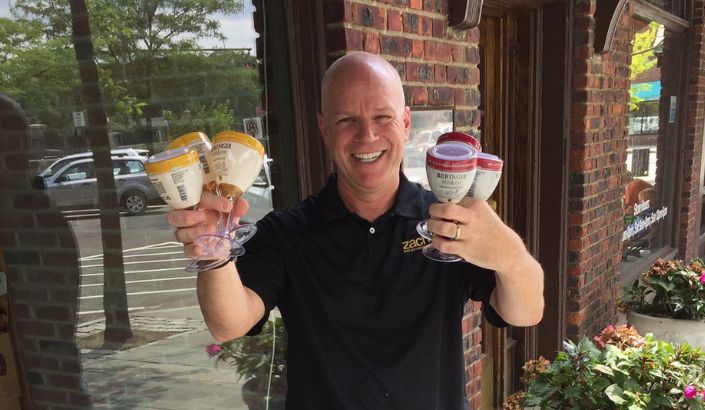
Zipz shot to fame for popularizing single-serve wine in creative packaging. The business was started by Andrew McMurray and J. Henry Scott. However, only Andrew pitched the product in season 6, seeking $2.5 million for 10% equity.
Wine connoisseur, Kevin O’Leary agreed to Andrew’s initial ask with a few adjustments. After the show, Zipz faced tough competition and wasn’t able to make a profit. As a result, they stopped making wine and focused on packaging other drinks.
Still, Zipz Wine makes $600,000 annually and is valued at $1 million. This is a far cry from their initial valuation of $25 million when they entered the Tank!
5. Vengo – $2 Million (Did Not Close)
Traditional vending machines are bulky. Vengo vending machines are different; they are small but smart. The machines can be installed anywhere and only need up to two feet of wall space.
These machines were originally called Taxi Treats by founders Brian Shimmerlik and Steven Bofill. The duo featured on season seven, asking for $2 million for a 12.5% equity stake.
Kevin and Lori Greiner made a deal to loan them $2 million at 7% interest for 3% equity, but the deal never closed. Vengo raised capital from other investors at a $50 million valuation. Today, Vengo earns $20 million in annual revenue.
6. Ten Thirty One Productions – $2 Million
Ten Thirty One Productions was an entertainment company that produced live horror shows. Melissa Carbone appeared on season five, asking for $2 million for 10%.
Mark Cuban invested $2 million for 20% and it’s still his largest ever investment on Shark Tank. In an interview with Business Insider in 2015, Cuban claimed it was one of his best deals at the time.
Ten Thirty One Productions was doing well until 2018, an accident at an event in New York led to an expensive lawsuit. This pushed the founders to sell the company to Thirteenth Floor Entertainment Group for an undisclosed price.
7. Fizzics – $2 Million
Fizzics makes a portable beer dispenser that uses patented micro-foam technology to turn any canned or bottled beer into a nitro-style pour with richer flavour and a creamy head. The founders secured $2 million for 16.67 % equity from Mark Cuban and Lori Greiner after impressing with side-by-side tastings.
Post-show, Fizzics expanded into retailers like Target, Amazon and QVC, but later filed for Chapter 11 bankruptcy in 2019 before reorganising. Today the company still sells its DraftPour and Original dispensers and generates several million dollars in annual revenue, though the Sharks aren’t publicly involved.
8. Rugged Events – $1.75 Million
Another event-organizing startup, Rugged Events, is the company that created Rugged Maniac, a race that spans 3.1 miles and features insane obstacles like towers, shipping containers, and colossal water slides.
Rugged Events was founded by retired attorneys Brad Scudder and Rob Dickens. The duo featured on season five of Shark Tank, seeking $1 million for 10% equity.
Cuban eventually bagged 25% of Rugged Events and their second company, Bull Run, for $1.75 million. The business sold an 80% stake to New Media Investment Group in 2018 for $10.4 million. The acquisition led to Cuban getting a huge return on his investment.
9. xCraft – $1.5 Million (Did Not Close)
Unmanned aerial vehicles (UAVs) are slowly becoming more mainstream. xCraft and its X PlusOne drone model were influential in turning this vision into a reality.
JD Claridge and Charles Manning teamed up to develop xCraft and make it an industry leader. The two gentlemen appeared in season seven to sell 20% of the company for $300,000.
All five Sharks teamed up to invest $1.5 million for 25%. The deal didn’t go through, so the entrepreneurs resorted to crowdfunding. In 2021, xCraft made $199,122 in revenue but made a net loss of $392,496. xCraft was valued at $34 million after its latest round of fundraising.
10. Beyond Sushi – $1.5 Million (Did Not Close)
Beyond Sushi is a plant-based sushi and vegan cuisine restaurant from New York that pitched for $1.5 million in exchange for equity. Sharks Lori Greiner and Matt Higgins offered the $1.5 million deal (30% of West Coast + 15 % of East Coast), but the founders ultimately declined the investment after the show.
The appearance gave the brand a sales boost and helped grow its presence in NYC, and the business continues to operate multiple locations while focusing on catering, events and broader hospitality ventures.
11. HyConn – $1.25 Million (Did Not Close)
HyConn makes a quick-connect fire hose and hydrant adaptor designed to save setup time for firefighting and industrial hose connections. The founder accepted a $1.25 million offer from Mark Cuban for full ownership plus a $100,000 salary for three years and royalties.
The deal fell through afterward when terms shifted and Cuban pushed for a licensing-led strategy the founder didn’t agree to. HyConn gained exposure from the episode and has continued as a niche hardware maker, though it never broke out into major commercial success.
12. Jackson’s Honest – $1.25 Million
Jackson’s Honest (now Jackson’s Chips) makes all-natural sweet potato and heirloom chips cooked in premium oils. The founders asked for $1.25 million for 5 % equity and secured a $1.25 million deal for 15 % with guest Shark Rohan Oza.
The brand has since expanded distribution into major grocery chains and online, rebranded to Jackson’s, built its own production facility, and achieved multi-million-dollar annual sales while maintaining strong retail availability.
13. Plunge – $1.2 million (Did Not Close)
Plunge makes premium cold plunge therapy tubs designed to bring athletic-style cold immersion to the home market. On Shark Tank the founders asked for $1.2 million for 5 % equity, and Robert Herjavec offered $1.2 million cash + $1.2 million loan for 12 %, but the deal never closed after filming.
Despite that, Plunge grew rapidly on its own – moving into a large manufacturing facility, expanding into saunas and accessories, and hitting tens of millions in annual sales as a leading wellness brand.
14. SparkCharge – $1 Million
Perhaps the biggest concern of electric vehicle owners is running out of power on the road. SparkCharge’s Roadie, the first portable EV charger, is the solution for this.
The device was created by Chris Ellis and Josh Aviv to fill a large gap in the market. They entered the Tank in season 12, asking for $1 million for a 6% stake.
Lori and Mark joined forces to invest $1 million for 10% equity and 4% advisory shares. SparkCharge then raised money from other investors. Now, it has $5 million in annual sales and is valued at $30 million.
15. Breathometer – $1 Million
The Breathometer is a breathalyzer for smartphones. It measured the blood alcohol content, which helps a user determine if it’s safe to drive after drinking.
Charles Yim invented the product and pitched the app in season five, requesting $250,000 for 10% equity. He made a five-way deal of $1 million for 30% with all five Sharks.
This helped Breathometer rack up millions in sales. However, the FTC shut down the product after discovering that its claims were misleading. Breathometer is still in business but is considered one of the worst deals on the show.
16. Yellow Leaf Hammocks – $1 million
Woven by Thailand’s Mlabri tribe, Yellow Leaf Hammocks are more than just tools for relaxing. They are produced with the intention of empowering underprivileged individuals.
Married couple, Rachel Connors and Joe Demin founded the hammock company. To grow the business, they appeared in season 11 to give away 7% equity for $400,000.
Guest investor Daniel Lubetzky was the one who closed a deal of $1 million for 25%. Currently, Yellow Leaf Hammocks make around $1 million in annual revenue and are worth an estimated $4 million.
17. BeatBox Beverages – $1 Million
BeatBox Beverages makes fruity, high-alcohol ready-to-drink punch and wine-based RTDs that gained attention for colourful packaging and bold flavours. Mark Cuban invested $1 million for one-third of the company after their Shark Tank pitch.
The brand grew into a major RTD player with nationwide distribution and strong retail sales, and in late 2025 Anheuser-Busch agreed to acquire an 85 % stake for about $490 million, with a path to full ownership expected to close in early 2026.
18. LARQ – $1 Million
Premium water bottles are very trendy nowadays. LARQ is a leading provider in this niche, and it makes self-cleaning water bottles that use ultraviolet-C LED technology.
As a hiking enthusiast, Justin Wang noticed that most water bottles develop a bad odor over time. So, he created LARQ and pitched on season 13 of Shark Tank, asking for $500,000 for 1% equity.
It was an eye-watering valuation, but Kevin and Lori eventually agreed to do $1 million for 4%. With this, LARQ is expecting to do $30 million in sales for 2022. LARQ is currently worth around $30 million. In February 2024, LARQ was acquired by Brita.
19. Numilk – $1 Million
Plant-based milk has a lot of benefits, but not many people have access to it. Thankfully, there’s Numilk, a device that makes almond milk on-demand without too many ingredients.
Founders Ari Tolwin and Joe Savin are serial entrepreneurs in the beverage industry. They knew that Numilk had massive potential when they signed up for season 12 in hopes of getting $1 million for a 5% stake.
Mark Cuban gave them more than they asked for, with $1 million in cash for 7% equity and a $1 million loan at 3% interest. This investment helped Numilk boost distribution and the machine is now sold in 133 stores across the US. The startup isn’t profitable yet but is currently valued at $55 million.
20. Bottlekeeper – $1 Million (Did Not Close)
BottleKeeper makes insulated holders that keep beer bottles cold and protect them from breaking. The founders agreed on-air to a $1 million investment for 5 % equity and a per-unit royalty from Mark Cuban and Lori Greiner. That deal did not close after filming.
The TV exposure drove a big spike in sales (300 % after the episode), and the company expanded into retailers like Ace Hardware, Meijer and Sur La Table while adding new products such as CanKeeper and PintKeeper. Post-show annual revenue was estimated at around $10 million+, and the business was later sold as an eight-figure outdoor-gear brand.
