
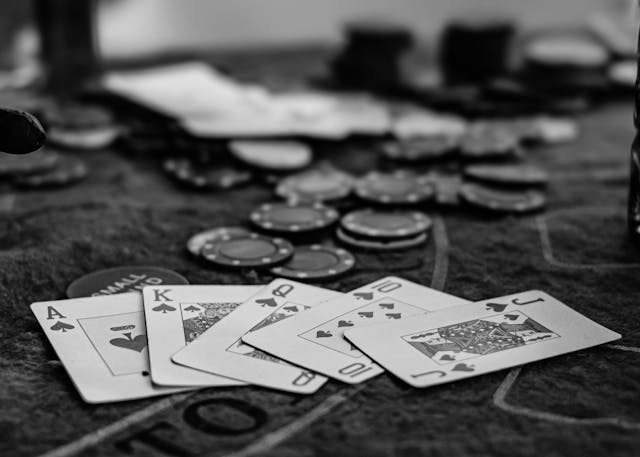
A solo developer in Saskatchewan spent two and a half years building a game that treats poker hands like puzzle pieces. Balatro arrived in early 2024 and sold over 1 million copies in its first month. By January 2025, that number had climbed to 5 million. The mobile version alone has generated more than $9 million in revenue.
LocalThunk, the anonymous creator behind the project, took the familiar language of flushes and straights and fed it through a roguelike grinder. The result is a game that asks players to forget most of what they know about winning at cards. There are no opponents sitting across the table. No chips pushed toward the center in moments of tension. No one folds. The game instead presents a series of escalating score targets that players must hit by playing modified poker hands across multiple rounds.
Critics and award bodies have responded with unusual agreement. Metacritic shows universal acclaim. OpenCritic reports that 100% of reviewers recommend the game. At the 25th annual Game Developers Choice Awards, Balatro took home 4 trophies: Game of the Year, Best Debut, Innovation Award, and Best Design. The 21st BAFTA Games Awards gave it Debut Game. The Game Awards 2024 added Best Independent Game, Best Debut Indie Game, and Best Mobile Game to the pile.
Hands That Break the Rules
Balatro strips away the social bluffing that defines standard poker games and replaces it with a system where the cards themselves become tools for manipulation. Players do not read opponents or manage betting rounds. They instead modify their decks with joker cards that warp scoring logic, turning a pair of twos into something worth more than a royal flush under the right conditions.
This approach borrows from roguelikes like Slay the Spire and Hades, where each run builds temporary power through randomized upgrades. LocalThunk applied that structure to hand rankings, creating a game where poker vocabulary serves mechanical experimentation rather than competitive tension.
The Joker Problem
Standard poker assigns fixed values to hand rankings. A full house beats a flush. Four of a kind beats a full house. Balatro keeps this hierarchy but makes it irrelevant. The joker cards collected between rounds apply multipliers, add bonus chips, and create scoring combinations that have nothing to do with traditional hand strength.
One joker might triple the score of any hand containing a 4. Another could add 50 chips for every card in your hand that shares a suit. A third might multiply your total score by the number of face cards played. Stacking these effects correctly means a modest two pair can outscore hands that would win any conventional poker game.
The math becomes absurd on purpose. Late-game runs require players to hit chip totals in the billions. Reaching those numbers demands specific combinations of jokers working in sequence. A single misplaced upgrade can doom an otherwise strong run.
Deck Manipulation as Strategy
Between rounds, players visit a shop where they can buy new jokers, sell existing ones, or modify their decks. Cards can be enhanced with seals that trigger bonus effects. Entire suits can be removed to increase the odds of drawing specific combinations. The 52-card deck becomes a customized engine tuned for particular scoring strategies.
Some players build around flushes, stripping their decks down to a single suit. Others chase straights by removing face cards and keeping only sequential values. The flexibility allows for hundreds of viable approaches, each requiring different joker combinations to function at high levels.
This manipulation extends to the cards themselves. Tarot cards found during runs can transform any card into another, change suits, or apply enhancements that boost individual card values. A simple 7 of hearts might become a glass card that doubles its contribution but shatters after a few plays.
Run Structure and Failure States
Each run moves through a series of antes, with each ante containing several blinds that must be defeated. Blinds set score targets that players have a limited number of hands to reach. Failing to hit the target ends the run entirely.
Boss blinds appear at the end of each ante and introduce modifiers that restrict play. Some bosses disable certain hand types. Others debuff specific cards or limit how many jokers can activate. These restrictions force players to adapt strategies mid-run or watch carefully constructed builds collapse.
The roguelike structure means death is permanent within a run. All jokers, deck modifications, and accumulated advantages disappear. Players start fresh with a standard 52-card deck and basic scoring multipliers. The loop of building, failing, and rebuilding constitutes the core of the game.
Why It Resonates
Balatro works because it uses familiar concepts in unfamiliar ways. Players already know what a straight is. They understand that certain hands rank above others. LocalThunk exploited that existing knowledge to skip lengthy tutorials and drop players directly into strategic decision-making.
The roguelike elements provide the replayability that poker lacks in single-player form. Each run presents different jokers in different orders, forcing adaptation rather than memorization. A strategy that dominated one run might never appear as an option in the next.
Platform Expansion
The game launched on PC and consoles in 2024. A dedicated Nintendo Switch 2 version arrived on February 25, 2026, running at 60 frames per second with HD Rumble 2 support and Mouse Mode controls. Players who owned the original Switch version received the upgrade at no cost.
LocalThunk had planned a major update for 2025 but pushed it to 2026 to avoid extended crunch periods. This decision came after a development cycle where a single person handled all programming, design, and implementation over more than two years.
The Absence of Competition
Balatro contains no opponents, human or artificial. The game never simulates another player holding cards or making decisions. The entire conflict exists between the player and the escalating score requirements. This removes the psychological element that defines competitive poker and replaces it with pure optimization puzzles.
Some players miss the human element. Others find freedom in the absence of unpredictable opponents. The game makes no apologies for its approach. It borrows poker terminology and applies it to something that shares almost nothing with actual poker beyond surface vocabulary.
